
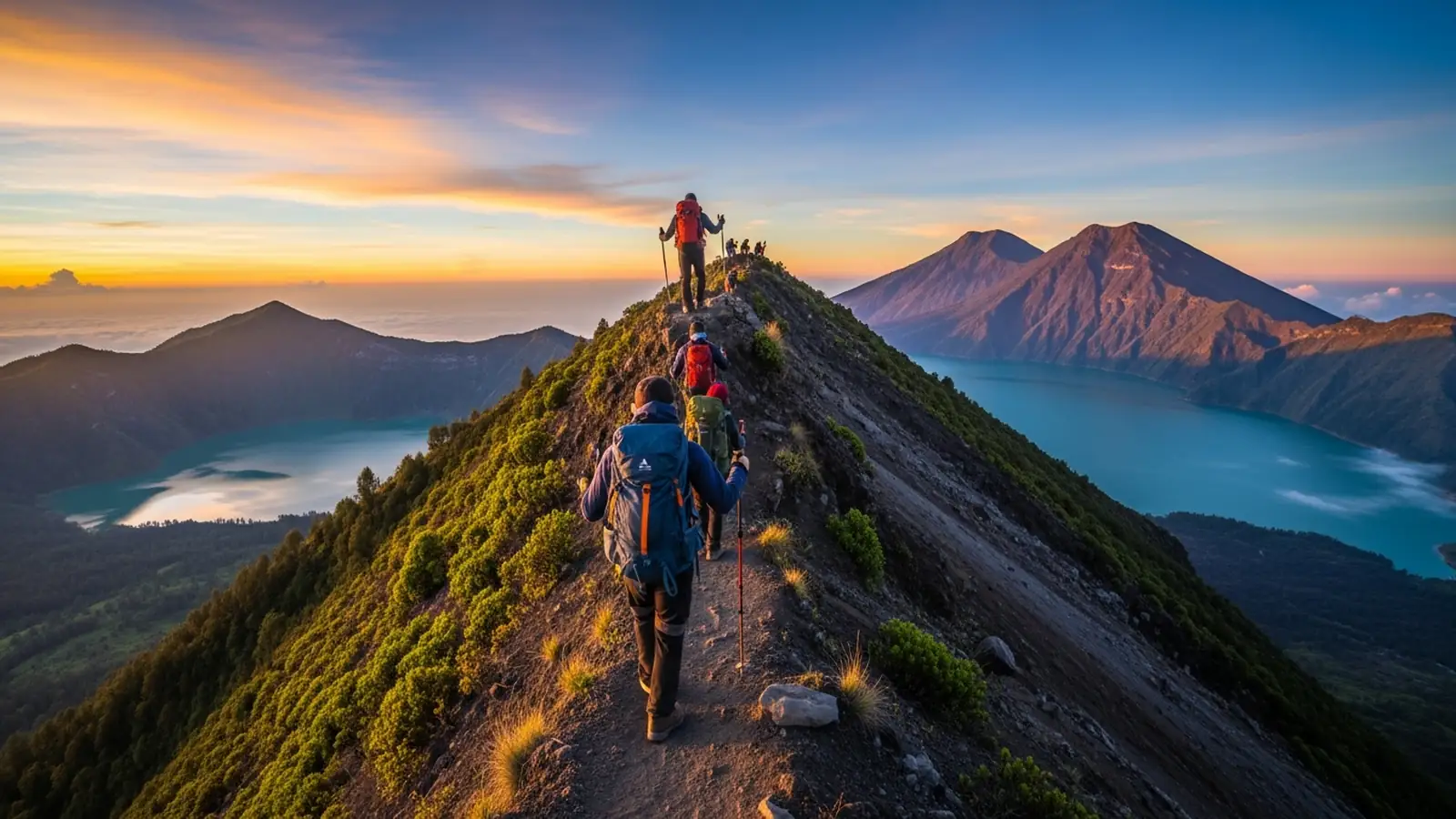
 Mount Rinjani · Lombok Island
Rinjani Base: Your Ultimate Guide to Mount Rinjani Treks
Independent expert guidance for planning your Mount Rinjani adventure, from permits and routes to local insights and responsible trekking practices. We connect you with trusted operators for unforgettable experiences.
What kind of Rinjani adventure are you planning?
Tell us your interests and we'll help you find the perfect trek and trusted operator.
You are planning a Mount Rinjani trek. This means navigating permit rules, understanding operator packages, and ensuring your trip is managed by licensed professionals. Rinjani Base provides the critical information and direct access you need. We clarify the trekking process, from route options like Senaru and Sembalun to what a standard 2-day or 3-day package includes, all based on verified facts. Your successful Rinjani expedition starts with clear, actionable guidance.
Understanding Mount Rinjani Trekking: The Essentials
Mount Rinjani is an active stratovolcano on Lombok Island, forming a central part of Gunung Rinjani National Park in West Nusa Tenggara, Indonesia [4]. This is not a casual day hike; Rinjani trekking is a regulated, permit-based activity within the park [5]. Treks typically span 2 to 4 days, involving multi-day camping on the mountain, as there are no permanent tourist lodges or hotels on the summit or crater rim used in standard trekking packages [4, 5]. The two main standard trailheads for commercial treks are the Sembalun village route and the Senaru village route, both situated on the north side of Lombok [4]. Operators usually charge roughly USD 80–450 per person, depending on the chosen route, duration, and the specific service level provided [4, 5, 7, 10]. This price range reflects a spectrum of offerings, from basic to more comprehensive packages. Rinjani Base focuses on presenting these options clearly. Understanding these fundamental aspects sets the stage for a well-prepared ascent, ensuring trekkers know what to expect from this significant Indonesian adventure. The mountain presents a unique challenge, and proper preparation, guided by accurate information, is paramount for safety and enjoyment. Factors like altitude acclimatization, physical conditioning, and awareness of the mountain’s weather patterns are crucial. The park is often closed during the rainy season (typically November to March) for safety and environmental protection reasons, so planning your visit during the dry season is generally advised [5]. This ensures more stable weather conditions and open trails for a more predictable and safer experience on the mountain.
Navigating Permits and Licensed Guides for Rinjani
Trekking inside Rinjani National Park requires an entry permit, which must be purchased through an operator or at official points [5]. Independent trekking without a permit is not allowed, establishing a clear regulatory framework for all visitors [5]. Furthermore, hiring a licensed guide is mandatory for standard tourist trekking routes in the park; trekking without a registered guide is simply not permitted for visitors [5, 4]. This regulation ensures safety and adherence to park rules. Typically, one licensed, English-speaking guide is provided per group, with a common operator practice limiting groups to a maximum of about 5 trekkers per guide [5]. This ratio allows for focused attention and better group management on the challenging terrain. Companies like Syam Trekker and others actively advertise licensed, well-trained guides and porters who are familiar with mountain safety protocols and guest management [1, 2]. Rinjani Base connects you with these verified operators, ensuring your trek complies with all park regulations. This mandatory guiding system is a cornerstone of responsible tourism on Mount Rinjani, protecting both trekkers and the natural environment. Guides are not just navigators; they are also responsible for communicating park regulations, ensuring the group’s pace is appropriate, and responding to any emergencies that may arise. Their local knowledge of the mountain, its weather, and its flora and fauna adds significant value to the trekking experience, offering insights that independent trekkers would miss.
Choosing Your Rinjani Trekking Route and Duration
Commercial Rinjani trek itineraries commonly include 2-day/1-night, 3-day/2-night, and 4-day/3-night camping treks [4, 7, 10]. The choice of duration often dictates the route and the experiences accessible. For typical 3- or 4-day treks, many operators utilise a “Sembalun up, Senaru down” route, ascending from Sembalun and descending to Senaru [4]. This approach often provides a varied experience of the mountain’s landscapes. A popular attraction on multi-day routes is the Segara Anak crater lake and its adjacent hot springs, where trekkers frequently stop for rest and bathing, particularly on 3-day itineraries [4, 5, 7]. The summit bid for Rinjani usually starts in the very early morning, pre-dawn, requiring trekkers to walk in the dark using headlamps [4, 5]. This early start is crucial for reaching the summit for sunrise. Rinjani Base clarifies these options, whether you are interested in a focused 2-day trek to the crater rim, a more comprehensive 3-day trek including the lake, or the full summit trek experience. Understanding these route variations is key to selecting an itinerary that matches your fitness and adventure goals. The 2-day trek typically involves ascending from Sembalun to the crater rim (Plawangan Sembalun) for sunrise, then descending back to Sembalun, or sometimes descending to Senaru without reaching the summit. The 3-day trek often includes the summit, the crater lake, and the hot springs, offering a more complete experience. The 4-day trek allows for a more relaxed pace, with additional time to explore the lake area or tackle the summit with more rest.
What to Expect from a Rinjani Trekking Package
Standard inclusions in reputable Rinjani trekking packages are comprehensive, designed to cover the essential needs for a multi-day mountain expedition [4, 7]. These typically cover a guide, porters, tents, sleeping bags, meals, snacks, drinking water, and the necessary park entry fees [4]. The guide’s role extends beyond navigation; they are responsible for the group’s safety, managing the trek pace, and providing information about the environment. Porters, often local to the Rinjani area, carry communal equipment such as tents, cooking gear, food, and water, significantly easing the burden on trekkers who only need to carry a day pack with personal items. Tents provided are usually dome-style, suitable for mountain conditions, and are set up by the porters at designated campsites. Sleeping bags are included to ensure warmth at higher altitudes, where temperatures can drop significantly overnight. Meals are prepared fresh on the mountain by the porters, often consisting of Indonesian staples like fried rice or noodles, along with eggs, vegetables, and fruit, designed to provide sufficient energy for trekking. Dietary restrictions can usually be accommodated if communicated in advance. Snacks, such as biscuits and fruit, are also provided to sustain energy levels between meals. Drinking water is supplied, either bottled or filtered from natural sources, ensuring hydration throughout the journey. Finally, the park entry fees contribute to the maintenance and conservation efforts of Gunung Rinjani National Park, supporting the preservation of its unique ecosystem.
Essential Physical Preparation and Gear for Rinjani
Undertaking a Mount Rinjani trek requires a reasonable level of physical fitness and appropriate gear to ensure both safety and enjoyment. This is not a casual walk; the terrain includes steep ascents, rocky paths, and loose volcanic scree, particularly on the summit push [4, 5]. Trekkers should engage in regular cardiovascular exercise, such as running, swimming, or cycling, for at least 2-3 months prior to the trek. Incorporating strength training for legs and core, along with practice hikes carrying a backpack, will also be highly beneficial. Proper hiking boots that are well broken-in and offer ankle support are crucial to prevent injuries. Layered clothing is recommended, including moisture-wicking base layers, insulating mid-layers (fleece or down), and a waterproof/windproof outer shell, as mountain weather can change rapidly. A headlamp with extra batteries is indispensable for pre-dawn starts and navigating campsites after dark. Other essential items include a comfortable daypack, a water bottle or hydration bladder, trekking poles (highly recommended for stability and reducing strain on knees), sun protection (hat, sunglasses, sunscreen), personal first-aid kit, toiletries, and any personal medications. Knowing your physical limits and preparing adequately will significantly enhance your Rinjani experience.
Responsible Trekking and Environmental Stewardship
Mount Rinjani National Park is a protected area of immense ecological and cultural significance, and responsible trekking practices are essential to preserve its natural beauty and integrity. Adhering to “Leave No Trace” principles is paramount: whatever you pack in, you must pack out. This includes all forms of waste, such as plastic bottles, food wrappers, and even organic waste like fruit peels, which can take a long time to decompose in mountain environments and disrupt the ecosystem. Designated campsites should always be used, and fires should only be made in established fire rings, if permitted, ensuring they are fully extinguished. Respecting wildlife by observing from a distance and not feeding animals is crucial for their well-being. Trekkers should stay on marked trails to prevent erosion and protect fragile vegetation. Furthermore, cultural sensitivity towards the local communities and the porters and guides who support the treks is important. Supporting licensed local operators ensures that your tourism dollars contribute directly to the local economy and sustainable practices within the park. By following these guidelines, trekkers play a vital role in maintaining Rinjani’s pristine condition for future generations and minimizing their environmental footprint on this remarkable natural wonder.
Booking Your Rinjani Trek: Key Considerations
Selecting the right trekking operator is a fundamental step in planning your Mount Rinjani adventure, directly impacting the quality and safety of your experience. Rinjani Base connects you with verified local operators, but understanding what to look for will aid your decision. Research operators’ reputations through reviews on platforms like TripAdvisor or Google, paying attention to comments about guide professionalism, porter support, food quality, and equipment condition [1, 2]. Ensure the operator is officially licensed and provides clear information regarding inclusions (e.g., specific meals, water quantity, sleeping bag quality, tent type) and exclusions (e.g., personal gear, tips) [4, 7]. Clarify the itinerary in detail, including trekking distances, ascent/descent profiles, and planned campsites. Communication prior to booking is key; a reputable operator will be responsive and transparent about their services, cancellation policies, and emergency protocols. Discuss any dietary restrictions or special requests well in advance to ensure they can be accommodated. Understand the payment structure, including deposit requirements and final payment methods. While price is a factor, prioritizing safety, guide experience, and responsible practices over the cheapest option is always advisable. Finally, consider travel insurance that covers trekking at altitude and potential medical emergencies, as this provides an important layer of protection for your journey.